PDF Ebook The Travels of Marco Polo, by Marco Polo Peter Harris
Yes you're right; this publication that is given in this internet site remains in the soft file. But, it doesn't indicate that it will certainly reduce the web content of the book. It precisely adds the benefits. You could copy the soft declare your very own gadget and also review it each time you want. The Travels Of Marco Polo, By Marco Polo Peter Harris is constantly being one of the recommended publications to read, by lots of people worldwide.
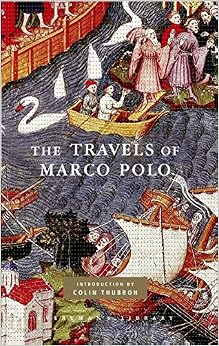
The Travels of Marco Polo, by Marco Polo Peter Harris

PDF Ebook The Travels of Marco Polo, by Marco Polo Peter Harris
What type of home entertainment publication that you will consider accompanying your vacation time in your vacation? Is that the fiction publication or unique or literary publication or the valid publication? Everybody has various preference to set as the enjoyable or home entertainment publication for checking out some may believe that the one that can amuse is guide that uses the enjoyable thing as well as its fiction. However, some additionally locate that they will enjoy the factual book as enjoyment to fulfil the leisure time.
Why must be The Travels Of Marco Polo, By Marco Polo Peter Harris in this site? Obtain more profits as what we have actually told you. You can locate the other alleviates besides the previous one. Ease of obtaining the book The Travels Of Marco Polo, By Marco Polo Peter Harris as exactly what you want is additionally supplied. Why? Our company offer you lots of kinds of guides that will not make you feel bored. You could download them in the link that we give. By downloading and install The Travels Of Marco Polo, By Marco Polo Peter Harris, you have actually taken properly to pick the ease one, compared to the hassle one.
By getting the The Travels Of Marco Polo, By Marco Polo Peter Harris in soft file, as chatted formerly, numerous advantages can be obtained. Besides, as what you know, this publication uses intriguing statement that makes people interested to review it. When you decide to read this book, you can start to know that book will constantly provide good things. This publication is really straightforward and gives large outcomes.
When choosing this The Travels Of Marco Polo, By Marco Polo Peter Harris to obtain and review, you will start it from the initial page as well as make deal to enjoy it a lot. Yeah, this book actually has great condition of guide to check out. Exactly how the author draw in the readers is extremely smart. The pages will certainly reveal you why guide exists for the wonderful people. They will concern you to be one that is better in undertaking the life as well as improving the life.
About the Author
Marco Polo was born in Venice in 1254 and died circa 1324.Peter Harris is the editor of the Everyman’s Pocket Poets volume Zen Poems.Colin Thubron is an award-winning author of novels and travel books, including Behind the Wall: A Journey through China and Shadow of the Silk Road.
Read more
Excerpt. © Reprinted by permission. All rights reserved.
I N T R O D U C T I O N--Of all the travel sagas ever written, none is more richly astonishing than Marco Polo's Description of the World. It records a land of such fabulous difference that to enter it was like passing through a mirror; and it is this passage - from a still-provincial Europe to an empire of brilliant strangeness - which gives the tale even now a dream-like quality. Even in its day - and for generations afterwards - Polo's book was often regarded merely as the fairy-tale conceit of a vainglorious merchant. Only with time has its portrait of China at the height of the Mongol dynasty - a portrait rich in details which once seemed too outlandish to be believed - been largely corroborated.Marco Polo was born in 1254 into a family of Venetian merchants, wealthy if not patrician. Even before his celebrated journey his father and uncle had travelled from Constantinople to the Crimea, then continued some 5,000 miles east to the court of Khubilai Khan - the Mongol emperor of a newly conquered China - probably at Cambalu´ , modern Beijing. Marco Polo describes their prodigious journey only briefly, as a prelude to his own. He records how the two men started back for Europe with a request from Khubilai that the pope send them back to him. They were to bring with them a hundred Christian savants and some oil from the lamp above Christ's sepulchre in Jerusalem. By the time Polo's father arrived in Venice in 1269, after sixteen years away, his wife was dead and he had a fifteen-year-old son, whom he had never seen. This was Marco.Two years later the seventeen-year-old youth, with the two elder Polos, set out on the long journey back to Cambalu´ . Their route is not always easy to follow. Marco's account, dictated almost thirty years later, is full of gaps and muddled chronology. But it seems that after visiting Acre on the coast of Palestine the Polos moved in a wide loop from eastern Turkey down through modern Iran to Hormuz on the Persian Gulf. From there they crossed Persia north-east to Balkh, in today's Afghanistan, and over the Pamir mountains through Kashgar to the Taklamakan desert of north-west China. Skirting this dangerous wasteland southward, they then circled north of the Yellow River to the khan's summer palace of Xandu´ , and at last to Cambalu´ . The journey had taken three and a half years.There follows the heart of Polo's narrative: a portrait of Khubilai Khan's world that is both reverential and intimate. In turn he evokes the great palaces of marble with walls sheathed in gold and silver, the curious court etiquette and sumptuous ceremonial banquets, the imperial pavilions, hunting and falconry. He describes the empire's fiscal policy and the novel use of paper money, the khan's easygoing religious faith, his wardrobe, his superb postal system, even the privacies of his sex life and harem.Then, travelling south, Polo writes of the ancient Chinese regions recently subdued by the Mongols, a world epitomized by the old Sung dynasty capital of Quinsai, modern Hangzhou. Even in its captive state, this city struck him as the gentlest and most refined in the world, and its now dead ruler as a paragon of benevolence. He goes on to give valuable accounts of the Mongol conquest and of the failed invasion of Japan, then, in an attempt to fulfil his professed purpose of describing the entire world, broadens his canvas into sketches of the lands he touched on during his return sea journey - and of others beyond those: Indonesia, Sri Lanka, India and beyond the Arabian Sea to Africa, even Russia.Polo was in China for between sixteen and seventeen years, and it is from this that the value of his narrative springs. He claims to have been an intimate of the great khan himself, and to have served as an imperial envoy, even as governor of a city.'Marco was held in high estimation and respect by all belonging to the court,' he says of himself immodestly. 'He learnt in a short time and adopted the manners of the Tartars, and acquired a proficiency in four different languages . . .' And again (in another manuscript): 'This noble youth seemed to have divine rather than human understanding.'The fact that nobody of Polo's name, or similar, is recorded in the imperial service by contemporary Chinese chronicles does not discount his claim. His duties were perhaps less official than he implies. Certainly it was a policy of Khubilai to employ able foreigners. Turkic and Persian Moslems especially, Indians and Nepalese, all served as a buffer between the Mongol overlords and their teeming Chinese subjects. The khan's personal bodyguard were foreigners from the Caucasus and beyond. His own mother, the astute and powerful Sorghaghtani Beki, was a Nestorian Christian. Polo himself mentions mercantile quarters in Cambalu´ for Germans, Lombards and French, and his family's mission to the Mongol court had been preceded by others more formal.In the mid-thirteenth century, half Asia seemed poised precariously between Islam and Christianity. Popes and Christian kings, fearful of the Moslem pressure on Palestine, grasped for salvation in rumours of a sympathetic Mongol power to the east. In 1245 Pope Innocent IV had sent the Franciscan friar Giovanni da Pian del Carpini to the court of the great khan at Khara Khorum (where he witnessed the enthronement of one of Khubilai's predecessors), and in 1253 Louis IX had despatched another friar, William of Rubruck. But both men returned with the same disheartening message: Let your kings come here and pay us tribute.As for Marco Polo's character, the man who percolates through his often terse and impersonal sentences is at once sharply observant and rather naive. His intelligence, it seems, was a merchant's: astute in practical things, energetic and resourceful. His obsession with the pomp and refinements of court, with feasts and ceremonial, costume and luxury, is that both of a salesman and a dazzled courtier. But typical of his mother city, he was tolerant of other faiths and practices. His routine dismissal of idolatry does nothing to dim his admiration for Mongol rule and Chinese life ('Their style of conversation is courteous . . . To their parents they show the utmost respect.') Like a harbinger of the new age, he is endlessly intrigued bythe novel and the different.But above all, there is the matter of Polo's integrity. Ever since it was written, his book has caused unease. Alongside verifiable fact and rigorous observation, he tosses in hearsay and credulous imaginings. A few sinologists have even asked: did he go to China at all? Could he have gathered his intelligence from elsewhere?In his Description Polo tells at least one outrageous lie. At the Mongol siege of the 'large and splendid' Sung city of Xiangyang, he claims to have been instrumental in its capture. Along with his father, uncle and two foreign engineers, he says, he designed a mangonel, a giant catapult, which lobbed stones into the city so that its defenders were panicked into surrender. Yet this unlikely story is invalidated by chronology: the city's capitulation took place in January 1273, some two years before Marco Polo even reached China.Here, it seems, Polo has fallen victim to sheer self-aggrandisement. What, one wonders, did his father and uncle think, who survived to hear this story? Perhaps they were complicit in it. Perhaps he even offered it to them as a sop: for after his arrival in China he barely mentions them again, as if their presence would detract from his own stature. Marco claimed, moreover, to have been for three years governor of the important trading city of Yangzhou. Yet once again there is no mention of him(or any Polo) in the detailed Chinese annals of the time.Other matters have stirred doubt among critics, such as Polo's failure to record the Chinese practice of female footbinding, printing or the presence of the Great Wall. But Polo's book is the flotsam of memory, with all its gaps and elisions. There were things that may even have become so familiar to him that he lost sight of their strangeness. He does, in fact, obliquely allude to foot-binding; and the Great Wall in his day was not the mountain-cresting spectacle built by the Ming dynasty three centuries later, but a cruder assemblage of staked palisades in earth or clay.More remarkable is the information Polo gives about phenomena which only became common knowledge years - or centuries - after him. His account of the disastrous Mongol expedition against Japan, however imprecise, was almost the first intimation that another country lay beyond the vast landmass of China. His record of the widespread use of coal too, and of paper money (first widely circulated under the Sung dynasty) fell strangely on European ears. And alongside rumours of dog-faced cannibals or of the mythic Prester John, other instances of hearsay ring belatedly true. Polo's descriptions of the custom of couvade, for instance - of men appropriating the power of women in childbirth, by imitation - was received with blank disbelief until confirmed by modern anthropology.However incoherently Polo's outbound journey was remembered and written, the modern traveller on the Silk Road stumbles with sudden recognition on phenomena he recorded. His account of the 'Old Man of the Mountain', founder of the fearsome sect of Assassins, is a garbled memory of a murderous Ismaili sect liquidated by the Mongols. But even today the traveller may ascend to their ruined bastion of Alamut in north-west Iran, and glimpse the cliff-castle of Maimundiz where they met their end.In the Pamir mountains the monstrously-horned rams that Polo described, now named 'Marco Polo sheep', have become an endangered species; the air on the plateaux is indeed so starved of oxygen that 'no birds are to be seen near their summits'; and fire, as he records with amazement, burns only fitfully.His journey along the southern rim of the Taklamakan desert may be followed to the salt wastes of Lop and the shrines of Dunhuang, crowded, as in his day, with 'idols'; and the sand dunes are still eerily noisy and shifting - although their sounds are now attributed to sharp temperature changes rather than the bustling of demons. The rare traveller to Khotan may still find the jade pebbles (Polo thought them chalcedony and jasper) carried on its rivers, or stumble with surprise on asbestos('salamander') mines in the Altun mountains: 'but of the salamander under the form of a serpent,' Polo writes in one version, 'supposed to exist in fire, I could never discover any traces in the eastern regions.' Northward the town of Hami (Polo's Chamul) remains rich in fruit, especially melons - but its women no longer consort freely with travellers; and eastward into modern Gansu province, in the obscure town of Zhangye, you may stumble with astonishment on one of the same giant reclining Buddhas as Polo knew.But the most solid corroboration of Polo's biography lies in his departure. In 1291, after nearly seventeen years in the service of the great khan, he says, he with his father and uncle joined a naval mission escorting the Mongol princess Cogatin westward. She was the bride promised to the Mongol ruler of Persia, and this apparently secret mission was only confirmed years later, from Chinese and Persian sources.The marvels that Polo recorded, of course, have gilded his book with an aura of fantasy. Wherever he did not personally observe his subject, he grew credulous. For beyond the horizons of his contemporary world the earth blurred into infinite possibility. More than a generation after Polo's day, the Travels of Sir John Mandeville, a ragbag of wonders and borrowings - and the most widely read book of its kind - was only falteringly disbelieved. So too, as Polo reaches beyond his immediate knowledge, his stories grow shaky with the fears and rumours of his time: with Tibetan astrologers conjuring tempests and thunderbolts, with the realm of Gog and Magog and the ruch bird which carries off elephants then drops them to smash on the ground before eating them. And black magicians effected the most famous miracle of all: the golden cups at the feast of the great khan, which levitated back and forth at his table before the eyes of the whole court.But in general Marco Polo was hard-headed. His veneration for the emperor may have been steeped in his bedazzlement by power and riches, and the Venetian was vulnerable to Mongol myths about themselves, praising even Chinggis Khan as a paragon of kindly justice. But the esteem in which he held the great khan Khubilai was not misplaced. The ruler, by Polo's time, had forged the largest and most populous empire there had ever been, and was attempting to unify it with a shrewd and far-sighted tolerance.The assessment of Marco Polo's character and integrity is complicated by the production of his Description of the World, which soon became known as The Travels of Marco Polo. For the book was not written by Polo, but narrated by him to a writer of Arthurian romances named Rustichello of Pisa while they languished together in a Genoese gaol.
Read more
Product details
Hardcover: 472 pages
Publisher: Everyman's Library; Reprint edition (October 21, 2008)
Language: English
ISBN-10: 0307269132
ISBN-13: 978-0307269133
Product Dimensions:
5.1 x 1.2 x 8.3 inches
Shipping Weight: 1.3 pounds (View shipping rates and policies)
Average Customer Review:
4.1 out of 5 stars
21 customer reviews
Amazon Best Sellers Rank:
#70,587 in Books (See Top 100 in Books)
It was an outrageous and fantastical story, like someone today claiming he’d been abducted by aliens and taken to some distant world of incredible wealth and unimagined technology. That’s how it seemed to the people of 13th-century Venice hearing the stories of Marco Polo upon his return from China. No one believed him. Later, when he published a book about his 17 years in China, they scoffed. A clown calling himself Marco Millions paraded around the streets of Venice in jest and everyone had a good laugh. Gradually, the Western World began to accept Marco’s tale as true. The lure of riches compelled Christopher Columbus to cross the Atlantic in search of Polo’s fantastical world, and discovered America instead. What exactly did Polo find that stunned Western Europe, and what drew him there? That’s the subject of “The Travels of Marco Polo.†Yes, we all learned about Marco in school and how his journey kick-started the age of discovery, but how much did we really learn having not read the book? If you’re going to read it, you won’t go wrong reading the Everyman’s Library edition, translated by William Marsden in 1908 and recently revised and updated, with notes on the people and places Marco described. It reads well, the notes are clear and helpful, there are a number of maps, and the intro by Colin Thubron not only sets the stage but the mood of Marco’s through-the-looking-glass experience.Marco, his father Niccolo and uncle Maffeo, sailed from Venice to Acre, a port south of Constantinople, then rode camels to the Persian port of Hormuz. They expected to board a ship and sail directly to China, but none of the ships were seaworthy. They continued overland to Balkh, in present-day Afghanistan, and on through a high-mountain pass of the Western Himalayas, to the Taklamakan Desert of Northwest China. At some point, they joined a caravan of traveling merchants and were attacked by bandits. The Polos escaped but many members of the caravan were killed or captured and sold as slaves. Having reached China, they circled north of the Yellow River, passed four times through the crumbling Great Wall, and, after three-and-a-half years of travel, arrived safely in the court of Emperor Kublai Kahn. Kahn held a great feast in their honor and apparently took a liking to young Marco, aged 21. Marco knew four languages and became a valued government official and member of the emperor’s court. Soon after their arrival, Kahn’s army secured control of southern China, and Marco was sent on a number of imperial visits to China’s southern and eastern provinces, and later to Burma and to India. Many of the places Marco saw would not be seen again by Europeans for another 500 years.As impressed as Marco was with Khan’s riches and with the splendor of the capital city of Beijing, it was the old capital city of Hangzhou that stunned him. He called it “the city of Heaven, the most magnificent city in the world.†The Polos were from Venice, one of the richest cities of 13th-Century Europe. It paled in comparison with Hangzhou. Like Venice, it was a city of canals, only larger and grander, situated between a broad river and a vast lake of clear water. Writes Polo: “It is commonly said that the number of bridges, of all sizes, amounts to twelve thousand. Those which are thrown over the principal canals and are connected with the main streets, have arches so high, and built with so much skill, that vessels with their masts can pass under them. . . . There are within the city ten principle squares or market-places, besides innumerable shops along the streets. In each of these, upon three days of every week, there is an assemblage of from forty to fifty thousand persons. . . . In other streets are the quarters of the courtesans, who are here in such numbers as I dare not venture to report . . . adorned with much finery, highly perfumed, occupying well-furnished houses, and attended by many females domestics. . . . In other streets are the dwellings of the physicians and the astrologers. . . . On each side of the principal street are houses and mansions of great size. . . . The women have much beauty, and are brought up with delicate and languid habits. The costliness of their dresses, in silks and jewelry, can scarcely be imagined.â€Polo described a canal 1100 miles long that connected Beijing with Hangzhou. He reported that the manufacture of iron was around 125,000 tons a year (a level not reached in Europe before the 18th Century) and salt production was on a prodigious scale: 30,000 tons per year in one province alone. There was the use of paper money and banking, moveable-type printing and the making of books, an imperial postal system, and a sophisticated communications network throughout China that allowed Kahn to manage his Empire without having to leave his palace. The land was fertile and food was ample, as was the production of silk, an industry Marco encountered wherever he traveled in China. Flowers grew everywhere. People bathed daily. In the bathhouses, water was heated by “burning stones†(coal), still unknown in Europe. While astrology and magic were commonplace, Christianity, Judaism, Islam, and Buddhism were accepted and taught in several houses of worship. There were great public granaries to store the surplus of good crops for public distribution in times of famine. Kahn instituted a policy that taxes would be remitted to all peasants who had suffered from drought, storms, or insect depredations. Writes Marco: “Not a day passes in which there are not distributed, by the regular officers, twenty-thousand vessels of rice, millet, and panicum.†There was also an organized system of state care for aged scholars, orphans, and the infirm. Wherever Marco traveled in China, he saw ornate buildings, fine art and food served on porcelain dishes. He encountered people dressed in silk who were ever courteous. The country was highly civilized, seemed to lack nothing.The Polos had no intention of staying as long as they did. Kahn did not want them to leave. They became worried about ever returning home, fearing that if Kublai died, his enemies might turn against them because of their close involvement with the ruler. After 17 years in China, Kublai’s great-newphew, then ruler of Persia, sent representatives to China in search of a potential wife, and they asked the Polos to accompany them, so they were permitted to go to Persia with the wedding party. Having arrived by ship in the port of Hormuz, they joined a caravan that brought them to a port on the east coast of the Mediterranean where they boarded a ship bound for Venice. If that weren’t enough adventure, Marco then fought in a war with Genoa and was arrested. While jailed for one year, he told his story to a professional writer. A book was published, but no one would believed Marco’s story until one or two centuries later. Having returned to Venice, Polo, age 45, married, had three daughters, and lived another 30 years. Today, the airport in Venice is named the Marco Polo Airport. I spent about a week reading “The Travels of Marco Polo†and felt like I was with him on his amazing journey. Five stars.
Classic book. This edition is fine but the size and print of the publication is on the small size. Keep your reading glasses handy.
"Few texts have aroused more controversy than the book of Marco Polo," notes the editor with good reason: the Asian tales that Marco Polo brought back to Renaissance Europe were absolutely unbelievable...except for the fact that most of them turn out to be provably true, especially in the context of this carefully crafted new edition.Like many "Great Works" this is a famous title that most people (myself included) have heard of throughout their lives...but have never read. One lazy Sunday I drifted into watching a Marco Polo mini-series, which I thought was a rather silly, romanticized, sensationalized Hollywood treatment. It annoyed me, but I watched it to the end...and then ran to Amazon to find a book to get the facts.Amazing news...the "sensationalized" mini-series barely scratched the surface of the astounding things Marco Polo reports in his actual book!This new edition makes his fantastic voyage accessible, substantiating his discoveries with considerable new analysis. This is largely due to the contributions of Sino-linguist Editor, Peter Harris, whose unique ability to consult original Chinese texts brings a new level of understanding to this work (much as he does in his new translation of the 13th century work A Record of Cambodia: The Land and Its People, which relates to my field of study).Back to the story itself, Polo was a merchant with the heart of an anthropologist. Accounts of terrain, natural resources, buildings and trade goods abound (and can be quite dry) but these are punctuated by his unusual observations of ethnicities, religions, social customs and royal intrigues.Indeed, Marco Polo's home was less civilized than the society he witnessed in China, to the point that he often had no point of comparison. Yet, he conscientiously describes city planning, landscaping, shopping malls, hospitals, public welfare systems with job retraining, organized law enforcement, paper money, military technology and systems of management, homes with central coal heat, multi-lingual government agencies, fire departments, long distance messenger networks, paved roads, public and private parks, and much more.And, perhaps explaining the book's centuries of commercial success, there are plenty of tales of cannibalism, polygamy, polyandry, cults of assassins, sexual behavior, dowry customs, human sacrifice, executions, funerary customs, prostitution, gambling, sport, magic ritual, strange beasts (rhinoceroses, elephants, leopards, crocodiles, serpents, the mythical Roc bird), etc.One comes away from this book in awe of the high civilization that existed in China, and with great respect for this brave man who did an admirable job of capturing the infinite diversity of 13th century Asian life.Read this account and share the adventures of his amazing journey!
The text is the text we have had at our disposal for centuries. The editing and annotation is superb making the text all the more understandable and readable.
Love the adventure
Very nice edition of this book. Wonderful jacket, binding, and paper.
the book is for kids:-) but even adults will learn a few facts. great book. beautifully illustrated
Good edition of this classic, in my opinion.
The Travels of Marco Polo, by Marco Polo Peter Harris PDF
The Travels of Marco Polo, by Marco Polo Peter Harris EPub
The Travels of Marco Polo, by Marco Polo Peter Harris Doc
The Travels of Marco Polo, by Marco Polo Peter Harris iBooks
The Travels of Marco Polo, by Marco Polo Peter Harris rtf
The Travels of Marco Polo, by Marco Polo Peter Harris Mobipocket
The Travels of Marco Polo, by Marco Polo Peter Harris Kindle
The Travels of Marco Polo, by Marco Polo Peter Harris PDF
The Travels of Marco Polo, by Marco Polo Peter Harris PDF
The Travels of Marco Polo, by Marco Polo Peter Harris PDF
The Travels of Marco Polo, by Marco Polo Peter Harris PDF